
General notes —
Must be in venous setting.
Use a high-frequency linear probe. Curvilinear probe may be required for patients with significantly deep veins.
Must label LEFT or RIGHT lower extremity.
Multi-point extended compression ultrasound (ECUS) is preferred over two-points.
Compress above, at, and below critical areas. Do not compress hard enough to collapse arteries if thrombus present, may dislodge clot.
If a DVT is discovered, continue with the protocol until the trifurcation, but do not have to compress significantly to avoid potentially dislodging the clot. This is helpful to evaluate the extent of the clot.
Sensitivity of below the knee ultrasound for DVT is very low, and treatment is controversial.
POCUS DVT studies end at the trifurcation and do not evaluate the calf.
It is recommended patients have a comprehensive study in 5-7 days if high risk and negative POCUS.
Multiple studies indicate that emergency physicians can accurately and quickly diagnose DVTs using POCUS.
There is a significant improvement in disposition time with POCUS DVT studies.
Basic Anatomy
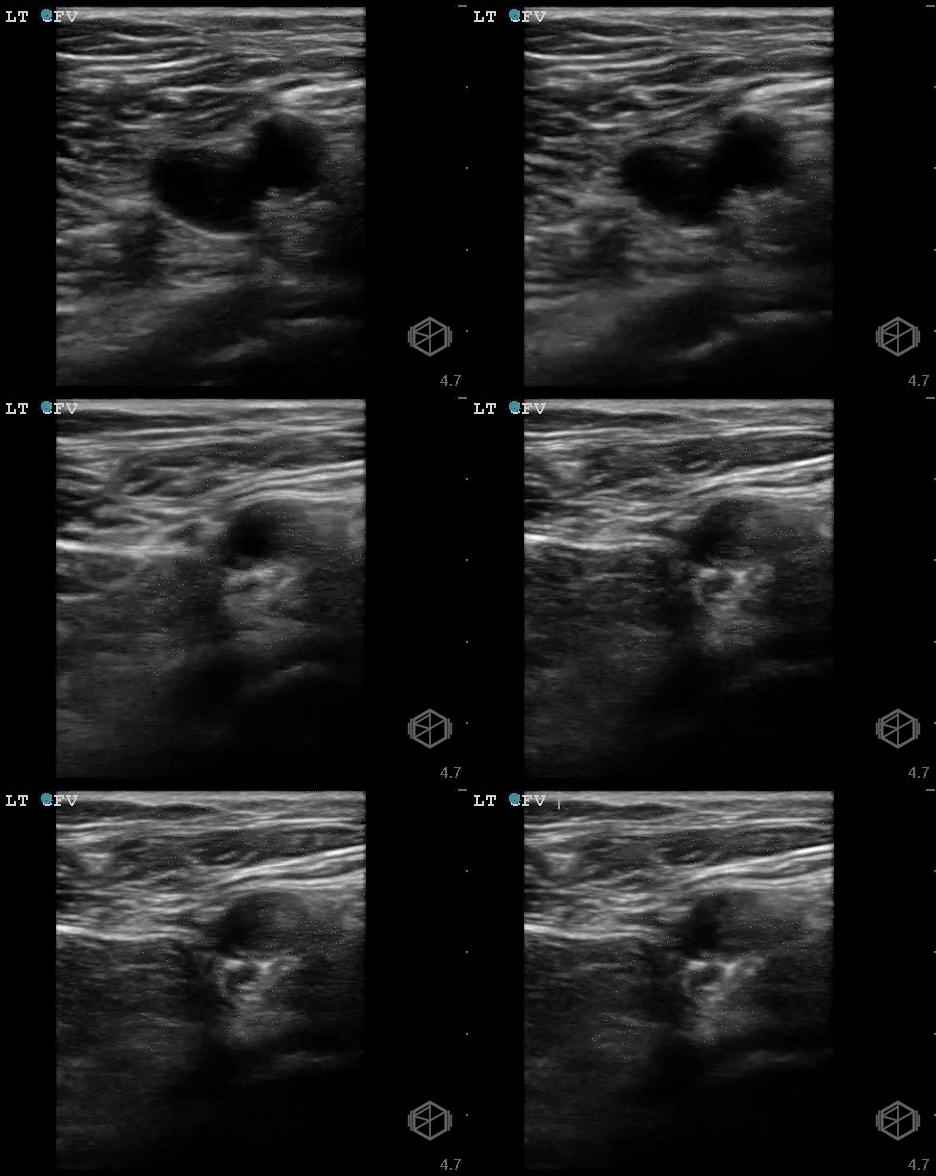
Common femoral vein (CFV) —
To identify the CFV, identify the saphenofemoral junction and move proximally.
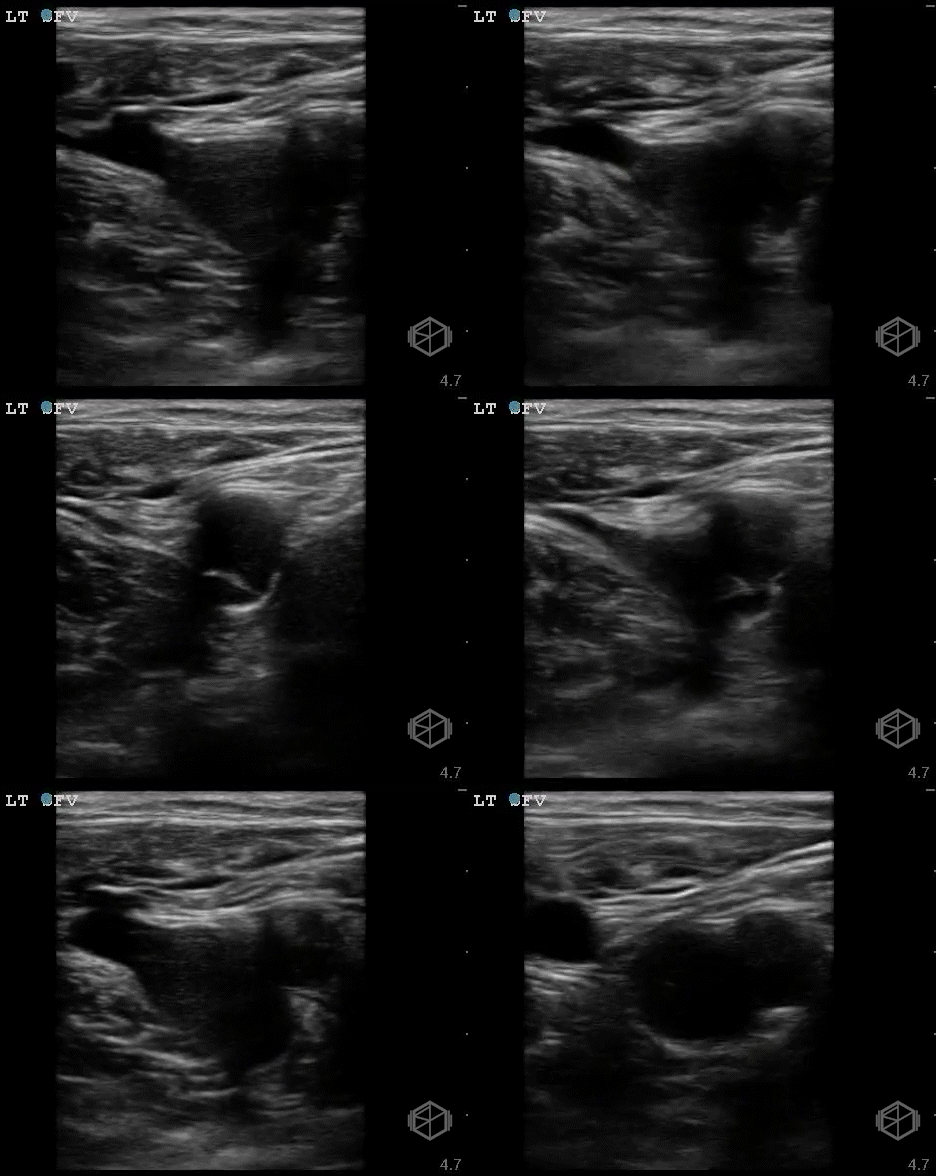
Saphenofemoral junction (SFJ) —
Demonstrate the branching the saphenofemoral vein, the SFJ.
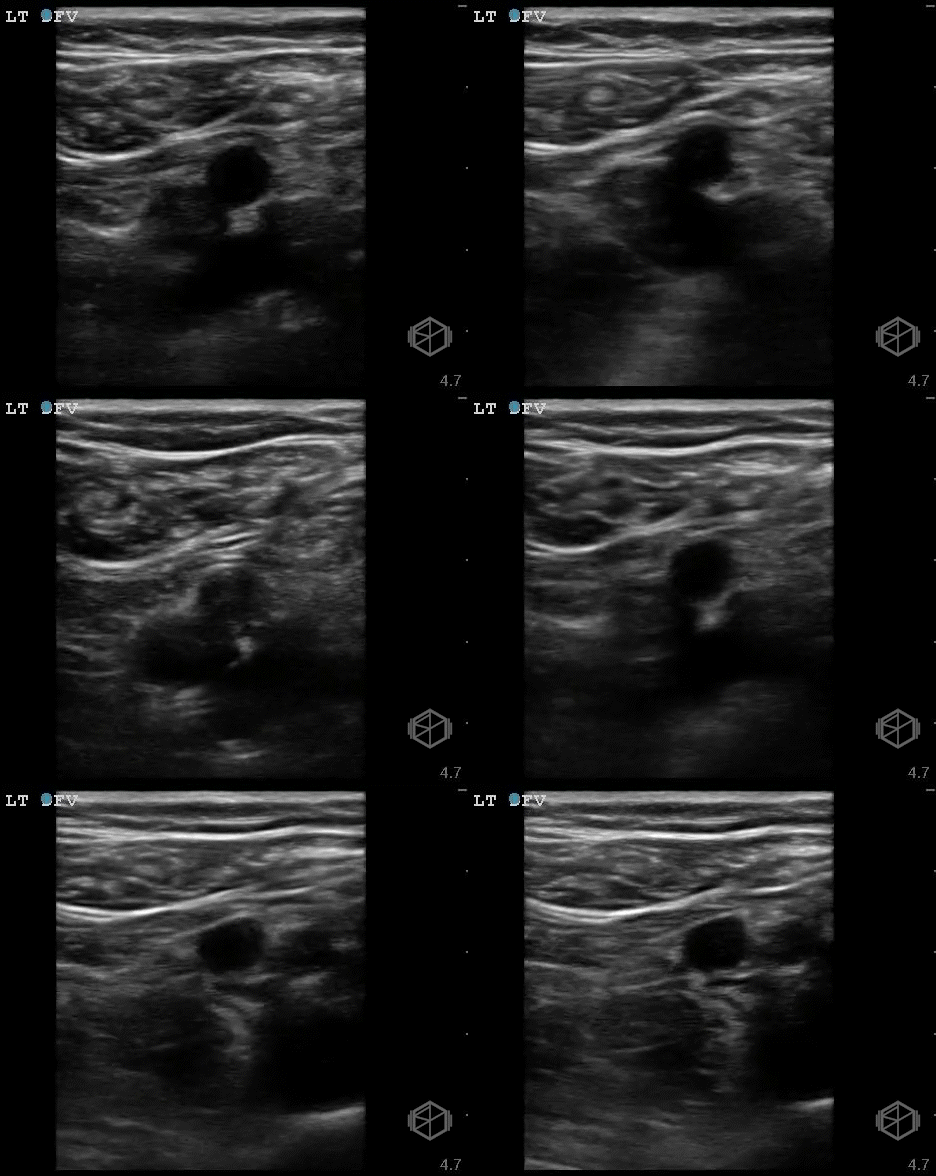
Femoral-deep femoral junction —
Demonstrate femoral and deep femoral branch point and compress.
Can continue compressing slightly below for another few centimeters.
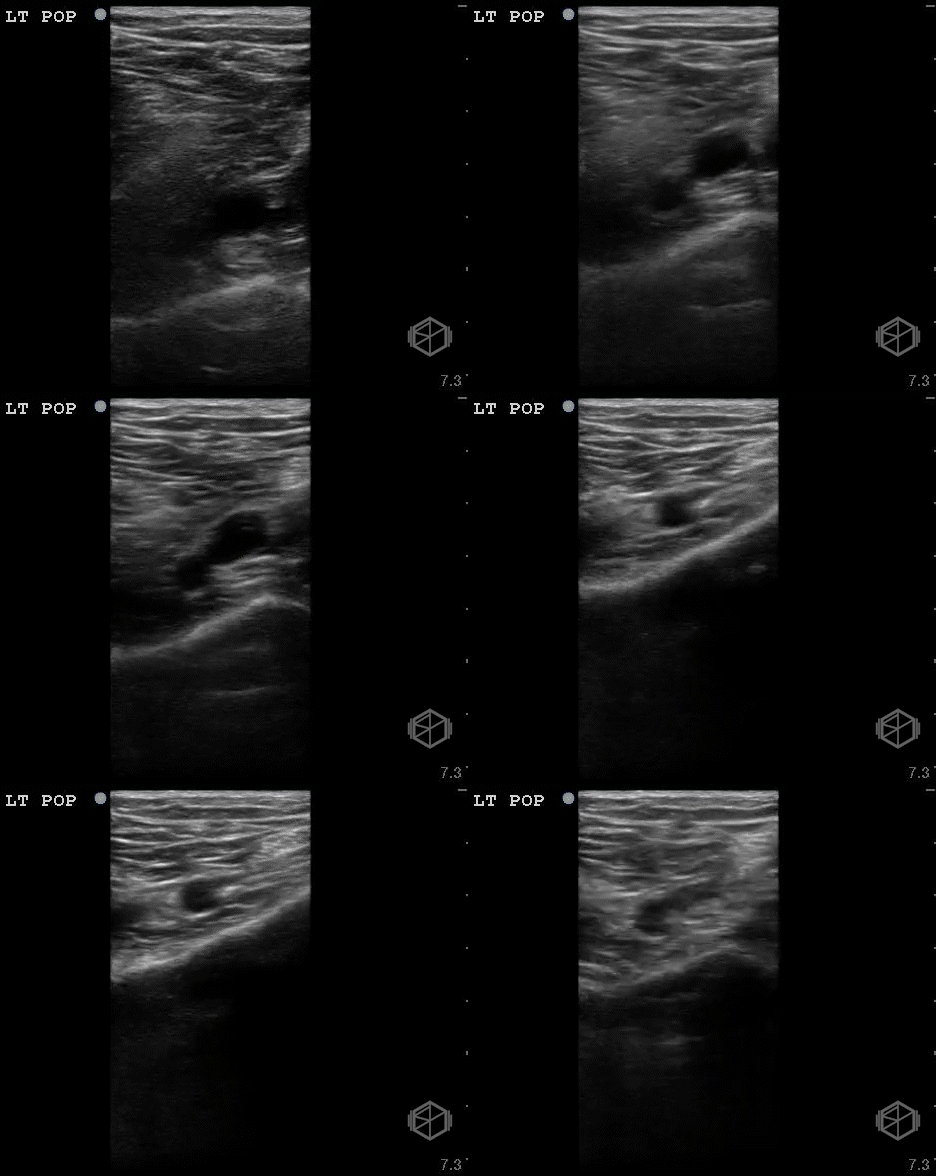
Popliteal vein —
Popliteal vein almost always on top of the popliteal artery, “pop-on-top.”
Generally more difficult visualize. Can try a lateral recumbent position with slight reverse Trendelenburg in a dependent position of unable to lift knee up.
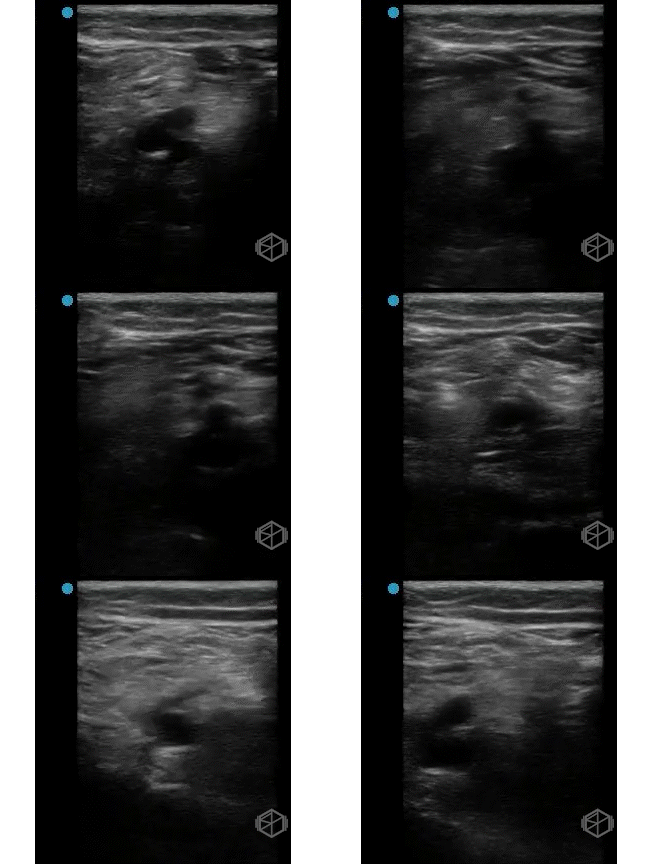
Trifurcation —
Anterior and posterior tibial and common peroneal veins.
Can slide down from the popliteal vein to appreciate these three vessels which may be laid out in any pattern.
Maybe difficult to visualize in obesity and edema.