
General notes —
Use an abdominal setting (or biliary).
Finding the common bile duct is often difficult for novice sonographers.
The common bile duct lies on top of the portal vein in long orientation making a “double barrel” type configuration as seen above. Color doppler may be used to determine the duct as there should be no flow. This is often easier to identify than the “Mickey Mouse” in short orientation.
Due to the difficulty in determining the difference between the common hepatic duct and the common bile duct, some prefer to just call this structure the common duct (504652).
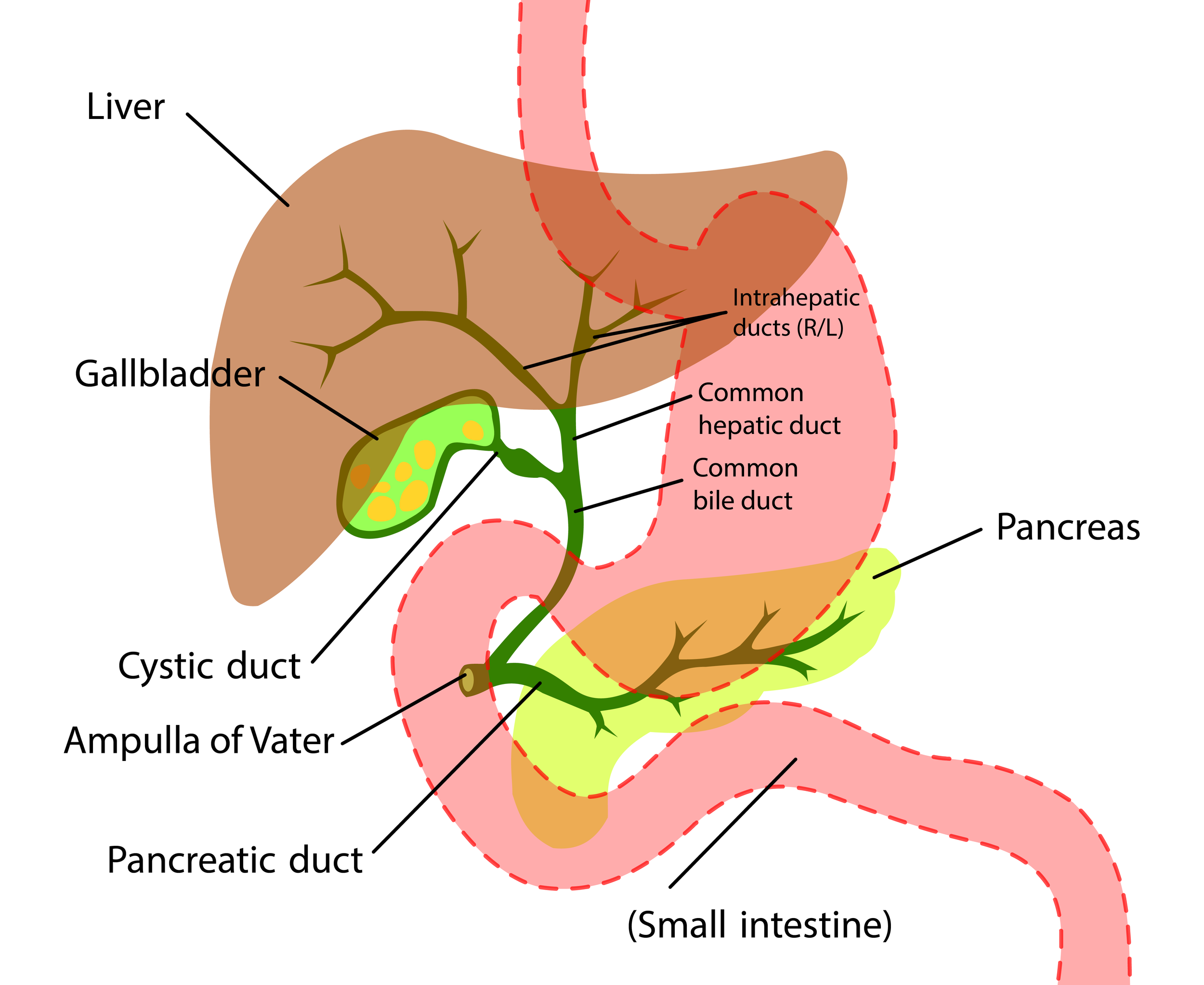
CBD measurement —
The CBD is measured inner to inner. There are various average sizes and no standard cut off but a common rule of thumb is that a dilated common bile duct is considered >4mm, increasing by 1 every decade at 50 and after.
So a 70-year-old can have up to a 7mm sized CBD, 90-year-old can have up to 9mm (14510259).
Later studies have questioned this, however it is still considered a rule of thumb (28668951).
In general, the CBD should remain under 6-7mm which is commonly accepted range for normal (11065260).
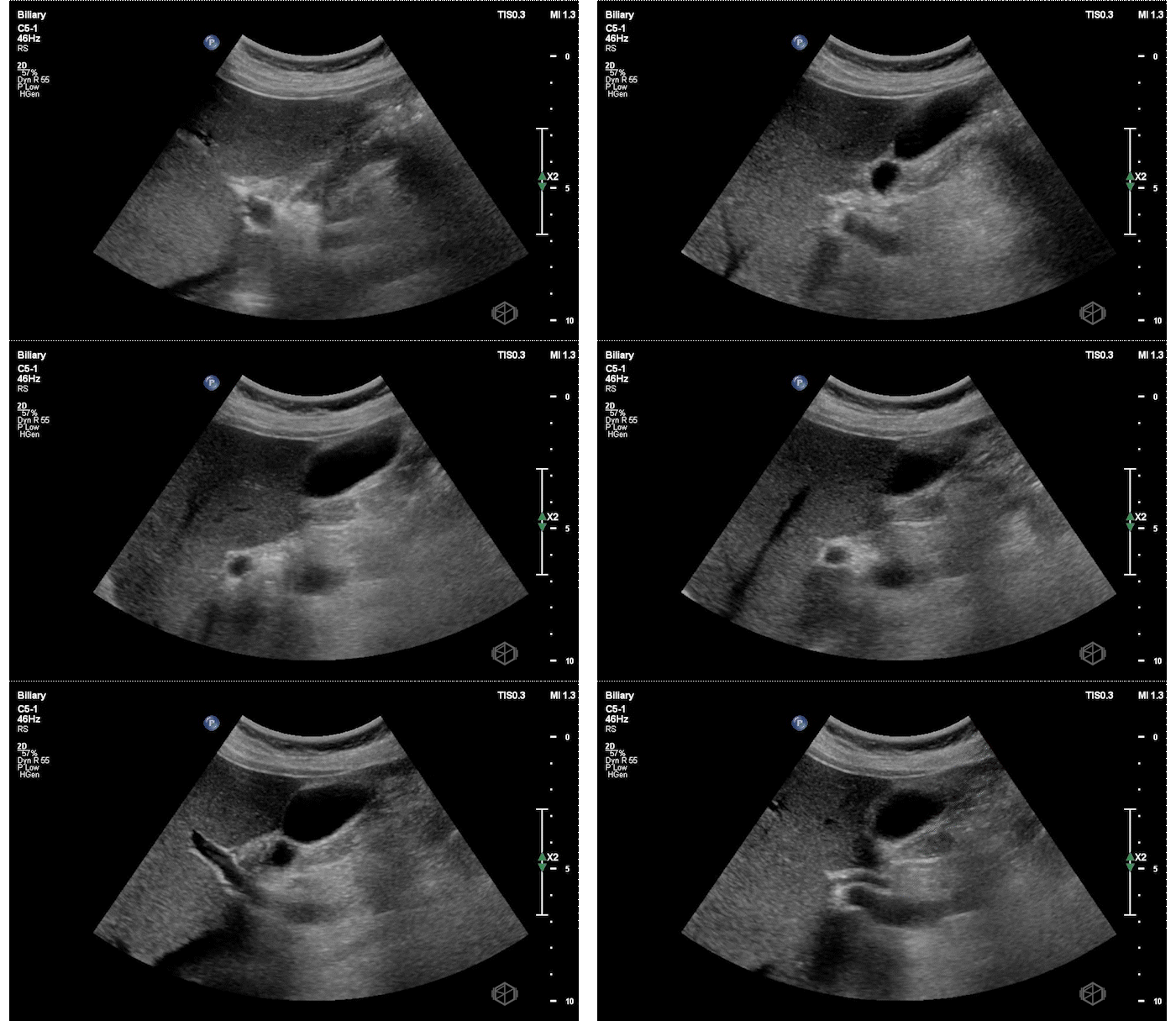
Normal CBD in long (note the double barrel)
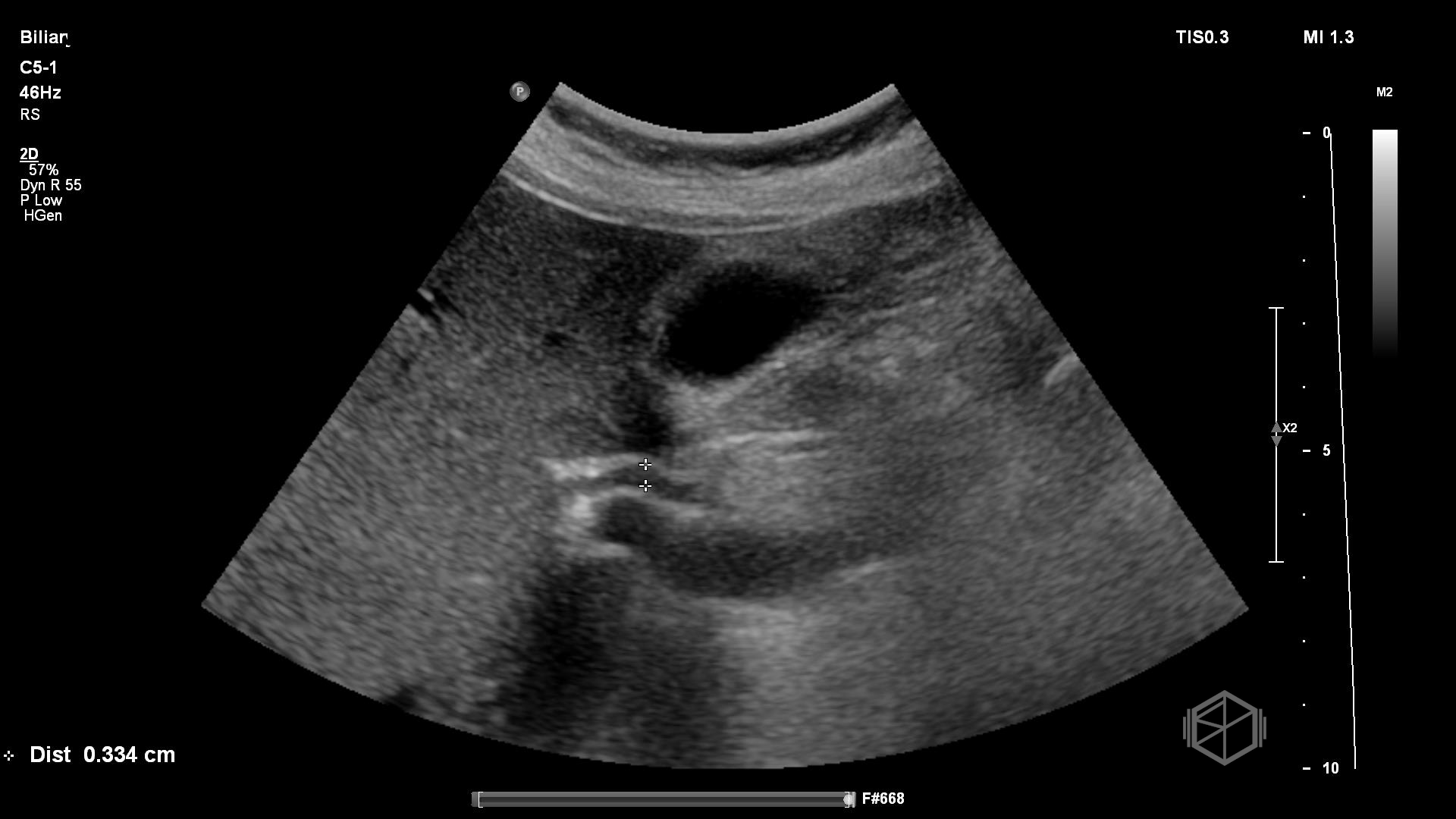
Normal CBD measurement
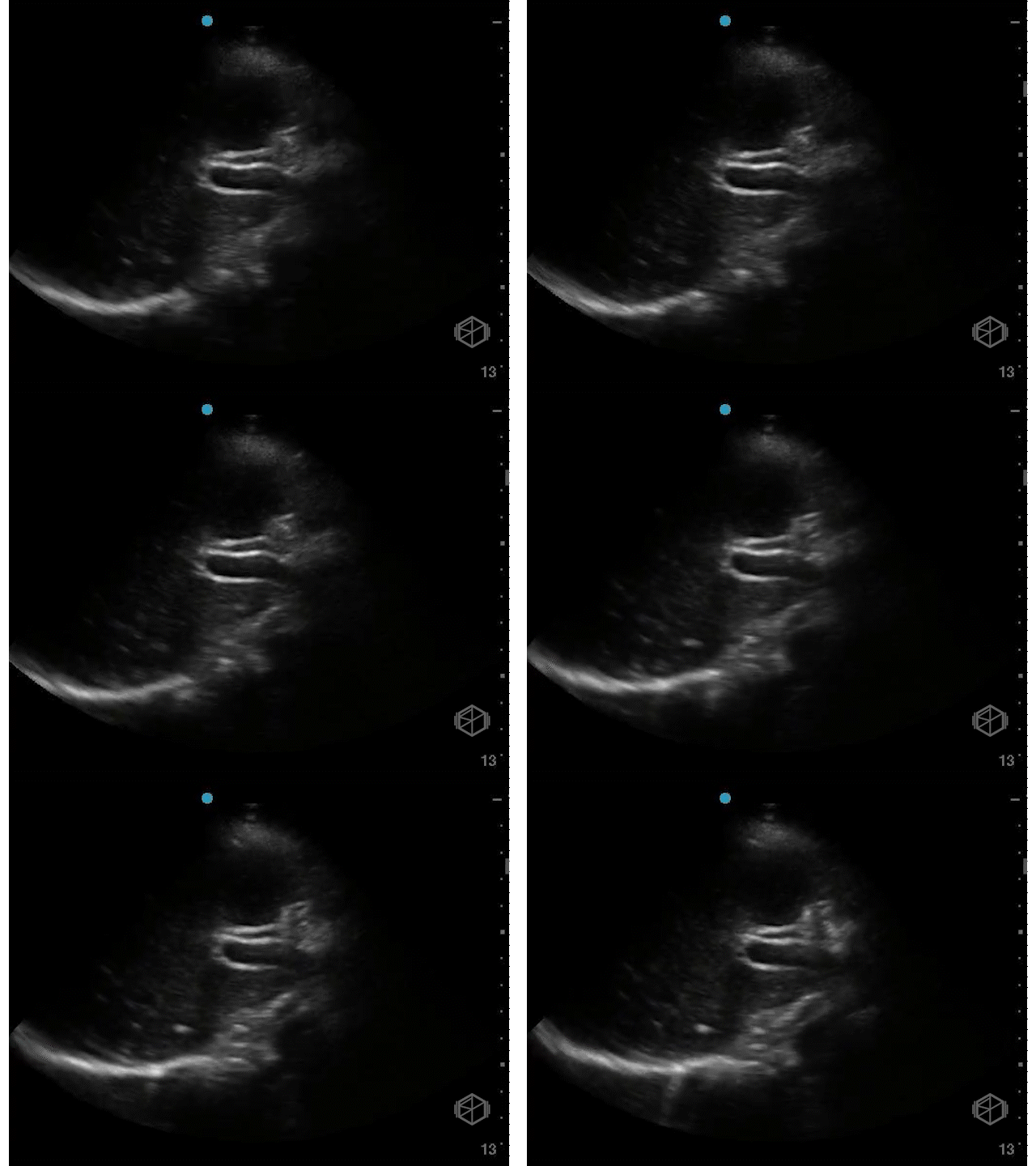
Normal CBD in long (double barrel)
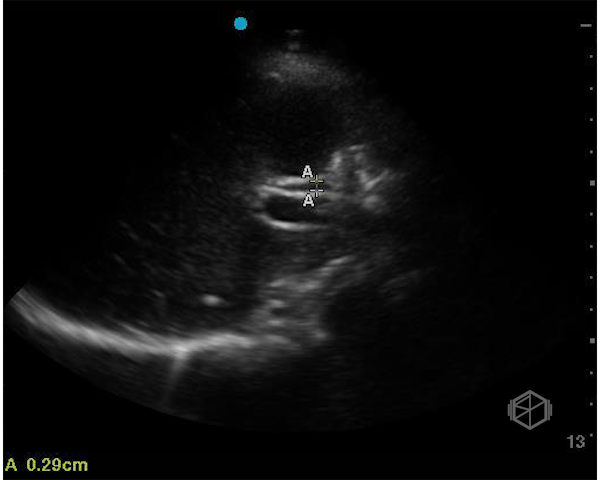
Normal CBD measured
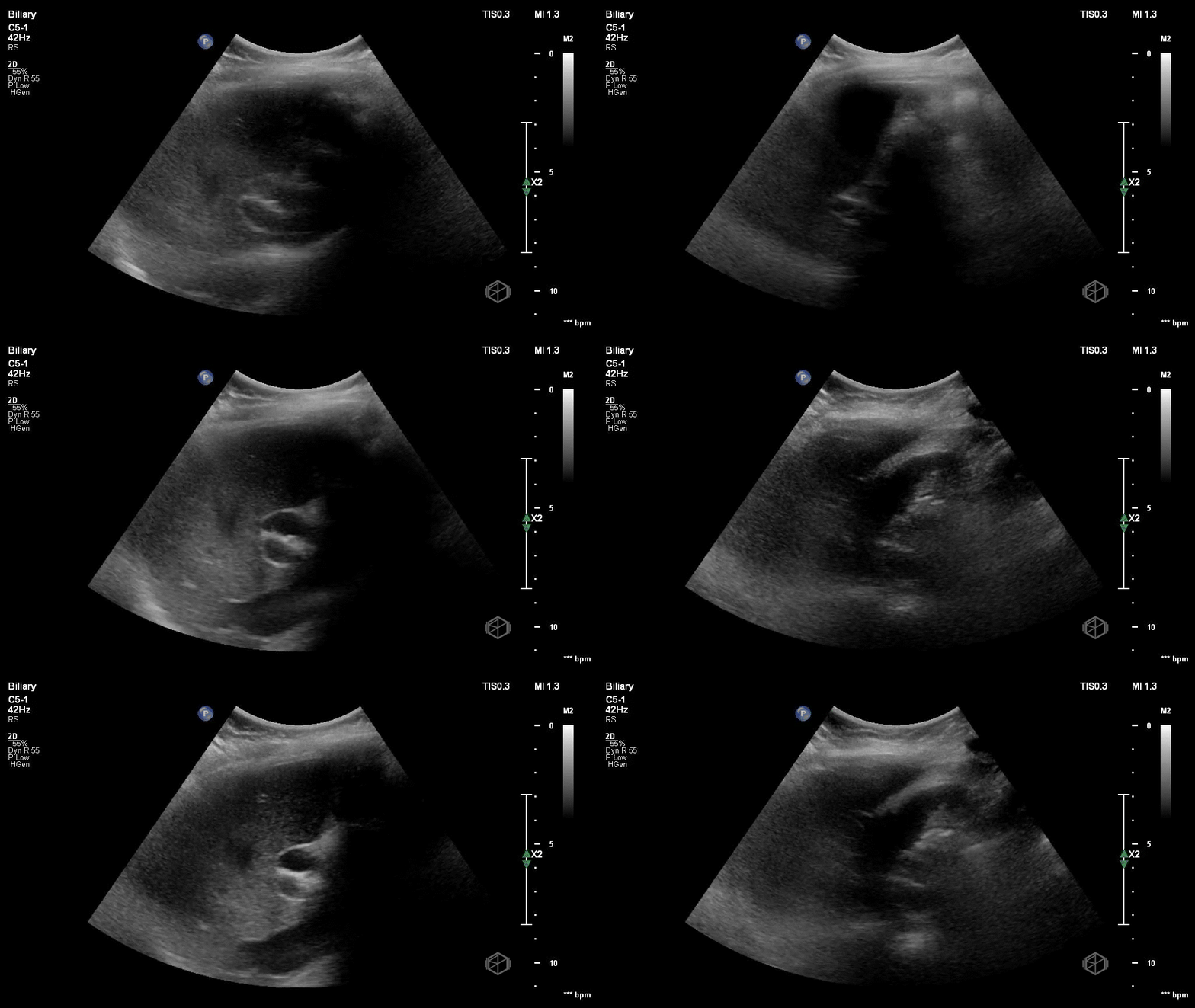
~90-year-old normal CBD
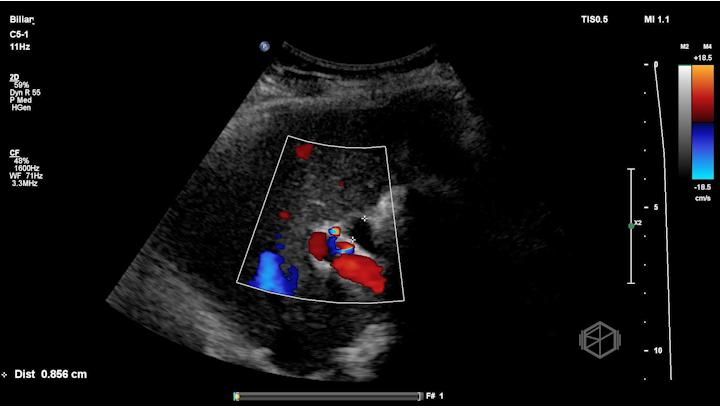
~90-year-old normal CBD measurement
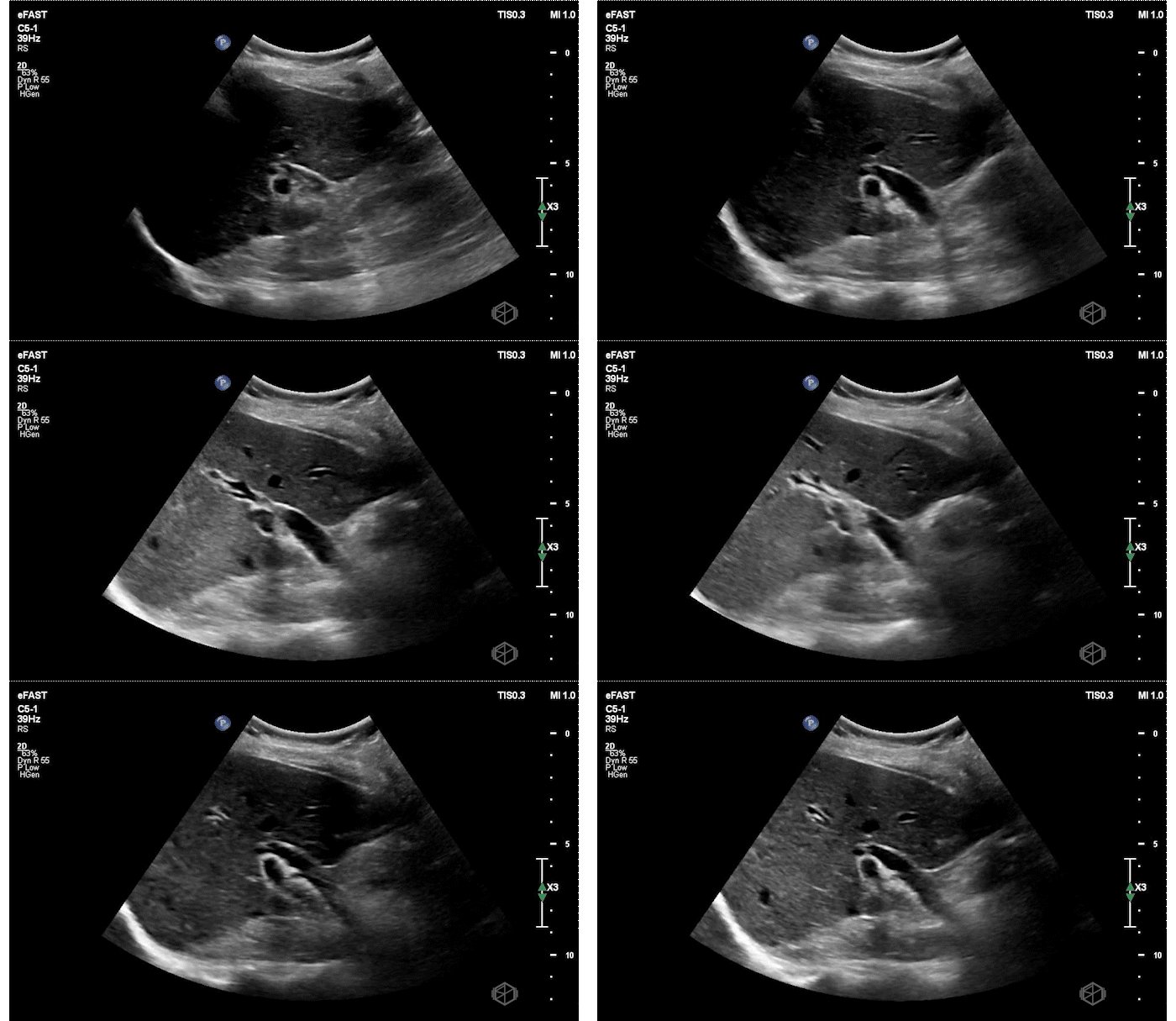
CBD Post-cholecystectomy
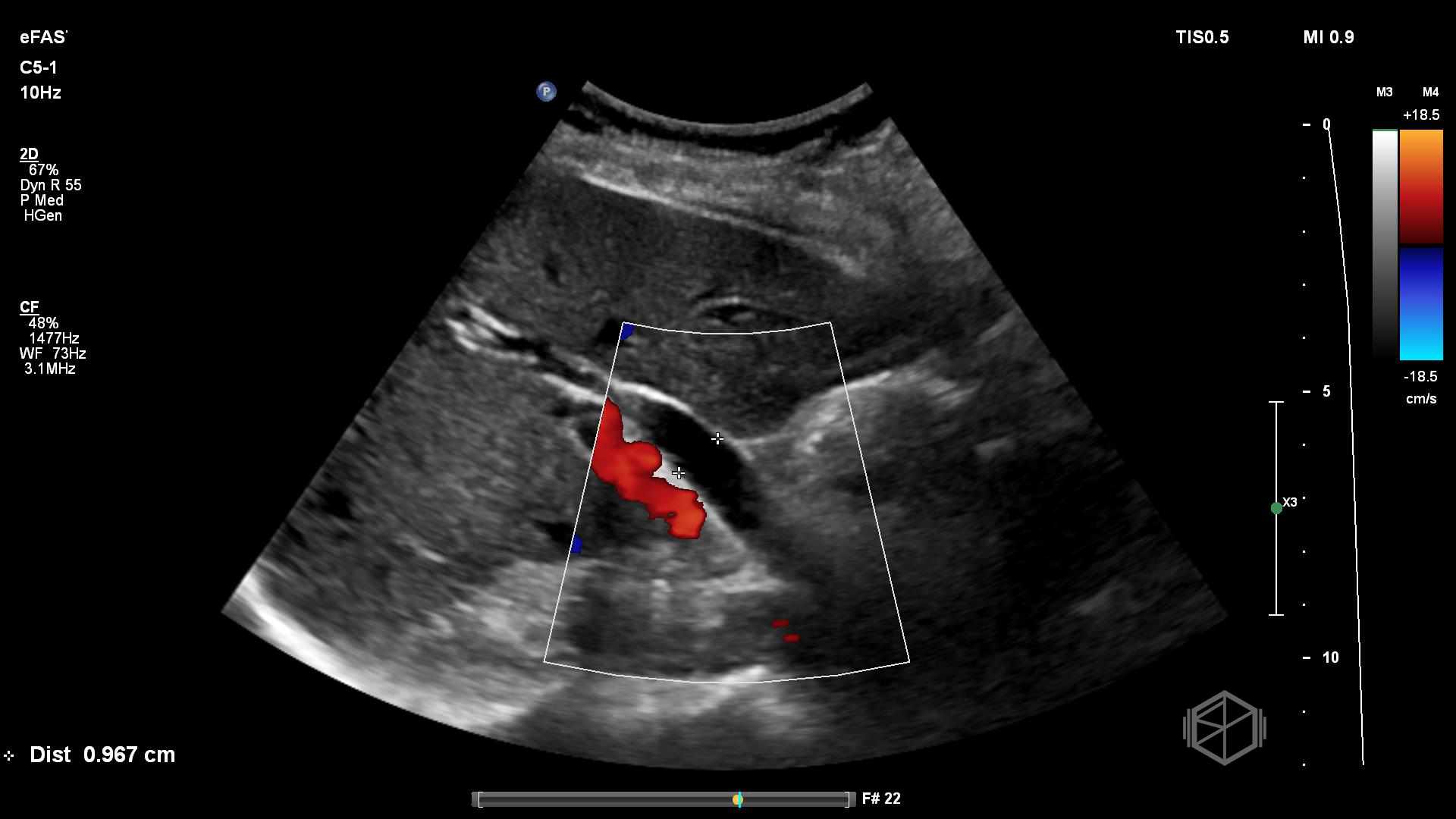
CBD Post-cholecystectomy measurement
CBD dilation —
A dilated CBD for age can occur due to various pathologies:
Choledocholithiasis (stones/sludge)
Malignancy (eg, pancreatic cancer, cholangiocarcinoma, ampullary carcinoma)
Extrinsic compression (eg, Mirizzi syndrome, lymphadenopathy, fluid collections)
Chronic pancreatitis stricture
Periampullary diverticulum
Primary sclerosing cholangitis
Papillary stenosis
Parasitic worm infection (uncommon in the United States)
Findings should be correlated with patient symptoms and labs.
Signs and symptoms of clinically significant obstruction include jaundice, steatorrhea, acholic stools, dark urine, pruritis, weight loss. Fever, right upper quadrant pain, and jaundice is concerning for ascending cholangitis.
Elevated bilirubin (total/direct), alkaline phosphatase, AST and ALT.
Dilated CBD due to ampullary mass (adenocarcinoma).
Choledocholithiasis —
The presence of gallstones and a dilated CBD for age indicate the potential for choledocholithiasis.
Choledocholithiasis may also be visualized on ultrasound as hyperechoic stones within the CBD.
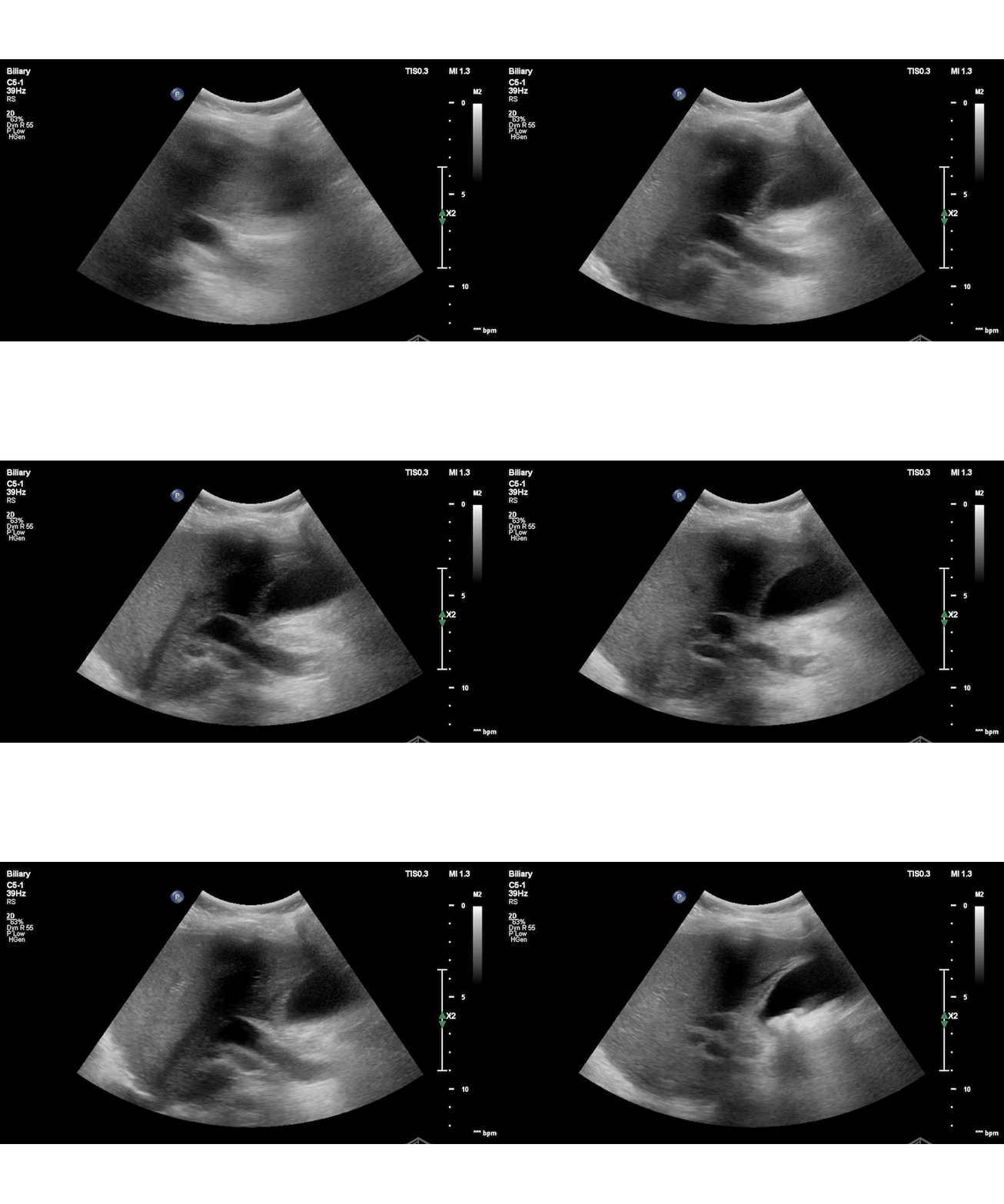
Dilated CBD with stone visible
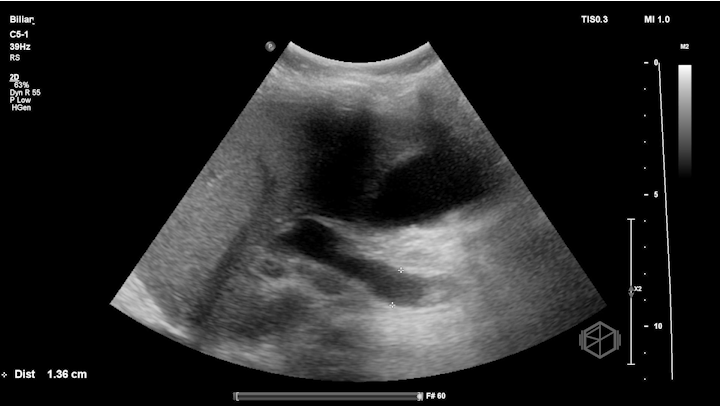
Choledocholithiasis with CBD measurement
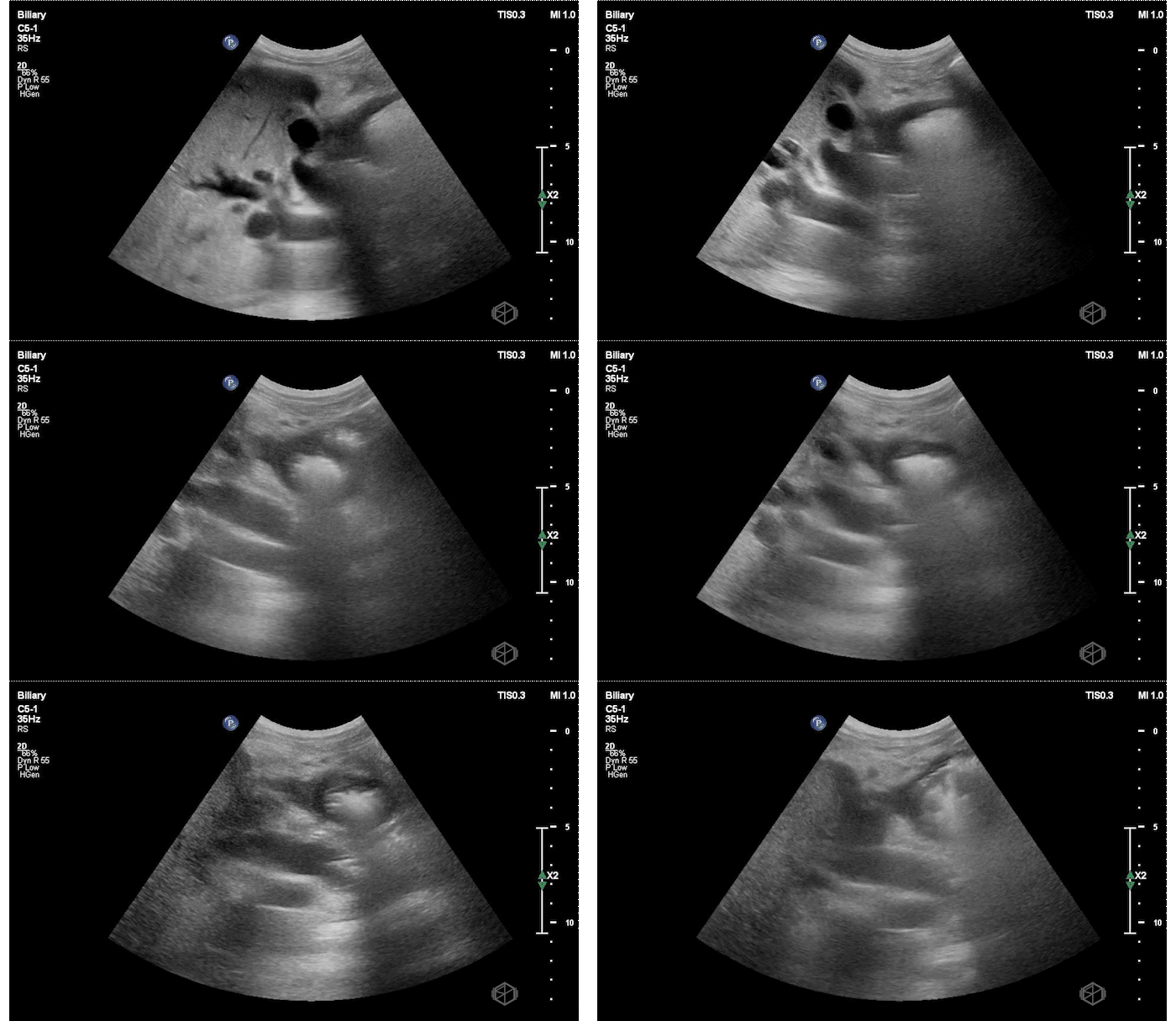
Significantly dilated CBD with large stones
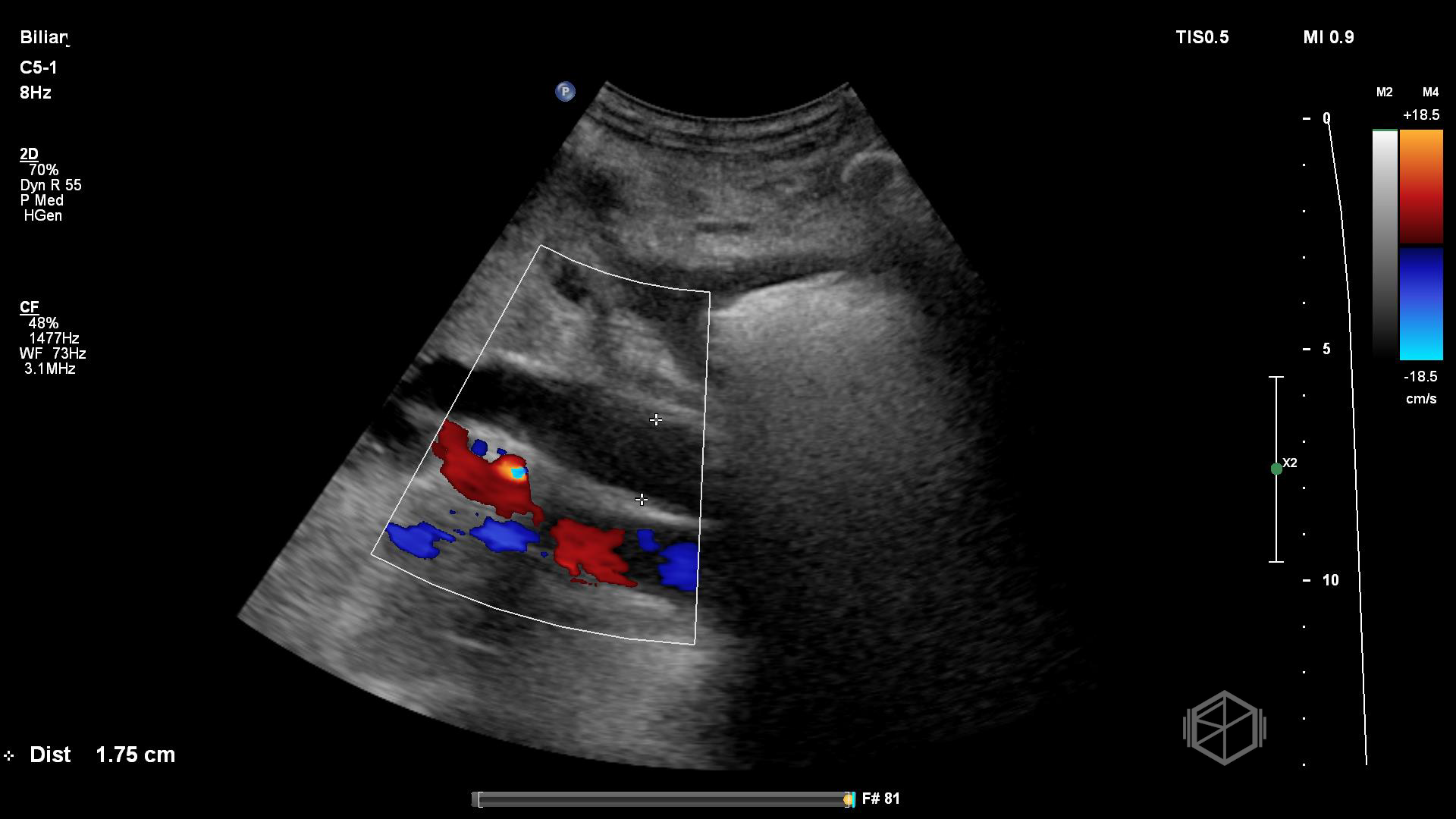
Significantly dilated CBD due to choledocholithiasis
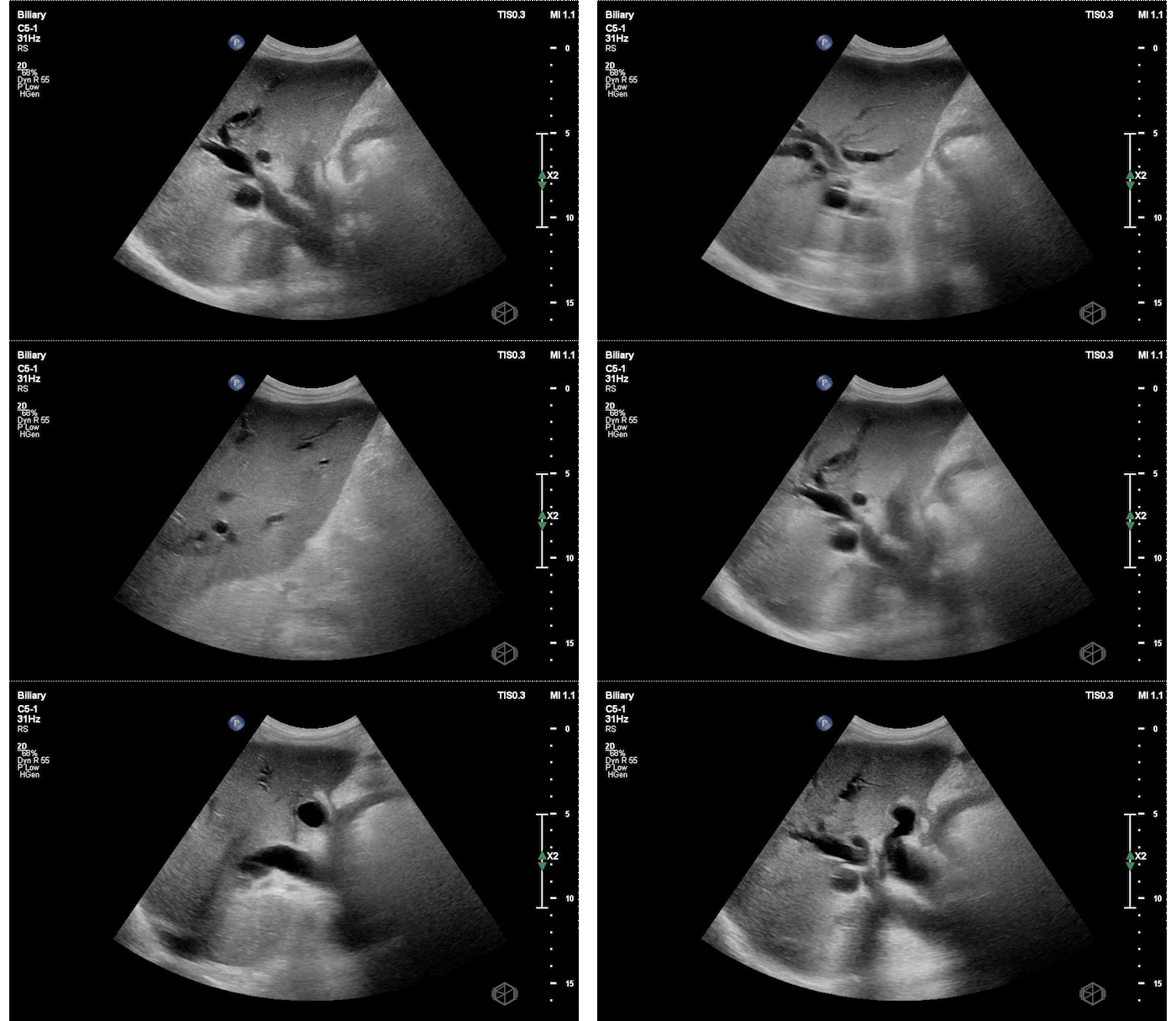
Intrahepatic biliary duct dilation